CBI passports in a crisis: strength vs neutrality—and why the EU’s “bloc advantage” works better
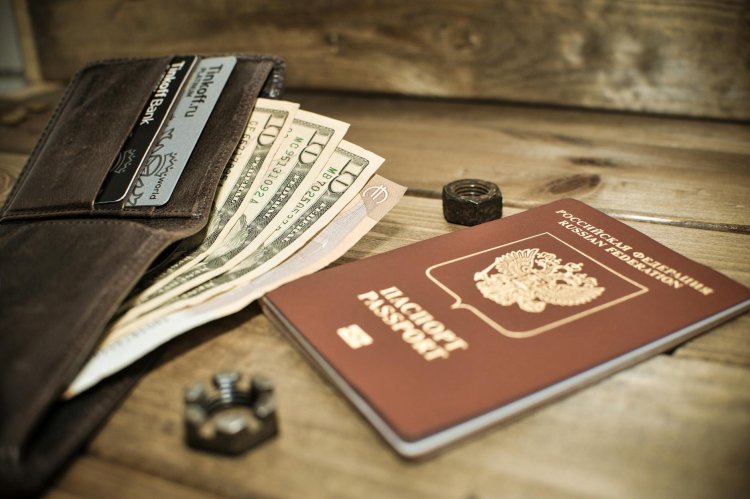
When borders close, airspace is restricted, and evacuations unfold across regions, one thing becomes clear: mobility isn’t a theory. It’s operations—systems working in real time, and how a passport actually “performs” when everything changes.
The Iran–U.S./Israel conflict has already disrupted air travel, triggered procedures for extracting citizens, and forced governments to move faster. At the same time, markets react: supply chains tighten, geopolitical lines are redrawn almost in real time. This isn’t a “stress test.” It’s a real evaluation of resilience.
These are the moments that expose uncomfortable truths for the market. Especially in investment migration: people talk a lot about freedom, but far less about how passports behave when stability breaks down.
In calm times, a second passport is often treated as a lifestyle tool—it makes travel easier, opens doors, and increases “optionality.” But in a crisis, the conversation shifts: a passport becomes a positioning instrument. And positioning under pressure directly affects outcomes.
The conclusion is simple: not all passports deliver the same value in crisis scenarios.
Why a “passport for freedom” differs from a “passport with geopolitical weight”
The key difference is this: one passport helps you move, while another carries additional geopolitical “load.” Most CBI (citizenship by investment) programs—especially in the Caribbean—are built around the first logic. They prioritize mobility, have commercially streamlined processes, and generally work well for travel and relocation.
These jurisdictions are typically small, neutral states. But it’s important to understand: neutrality is not the same as strength.
Consider Turkey for comparison. Turkey isn’t a “superpower,” but it is a serious geopolitical actor with a mature diplomatic network and practical crisis-response capabilities. This is documented.
In 2023, in Sudan, Turkey launched ground rescue operations while major Western powers carried out parallel air evacuations. In Libya in 2011, Turkey converted a ferry into a hospital ship and evacuated hundreds of wounded people from Misrata. In Lebanon in 2024, Turkey deployed a full crisis delegation and coordinated evacuations with roughly twenty countries.
Three crises—three continents—three concrete deployments. That is the scenario of a geopolitically active passport, one that reveals itself under pressure.
Caribbean programs work differently. Countries such as Antigua and Barbuda, Saint Kitts and Nevis, Dominica, Saint Lucia, and Grenada aren’t designed to project power. Their model is to stay out of conflict, offering neutrality, efficiency, and a certain “distance” from geopolitical fault lines—often underestimated.
There are also more niche jurisdictions—such as São Tomé and Príncipe, Nauru, or Sierra Leone. The market often overlooks them: they seem too small or not “prestigious” enough.
But in a world of fragmentation, obscurity has its own logic. Such countries are less likely to become central targets in major geopolitical conflicts. They are less often singled out for sanctions, which means they tend to function outside the “power structures” that shape global tensions. They may not evacuate you from a war zone—but they are less likely to become a direct participant in the situation.
And that distinction matters more than many people assume.
European approach: why the EU’s “bloc advantage” changes the game
A particularly telling example sits between two poles—power projection versus a small neutral state: European CBI programs.
Today, both core models have been discontinued. Malta’s MEIN program (which replaced the former Individual Investor Programme) ended in 2025 after an EU Court of Justice ruling on legal violations. Cyprus shut down CBI in 2020 amid an internal political scandal. New applicants are no longer accepted, but thousands of people have already obtained passports.
When tensions in Lebanon intensified in late 2024, neither Malta nor Cyprus organized a standalone evacuation of their citizens. Malta’s prime minister spoke about preparations, but without specifics or operational details. Cyprus sent not a single aircraft. Meanwhile, Greece carried out the evacuation: its military transport delivered Cypriot citizens from Beirut.
So Cyprus’s actual role was primarily logistical: it activated a transit plan to process evacuees from other countries who were passing through the island. A similar function was seen in 2006, when around 60,000 people transited through Cyprus during the war.
The lesson here isn’t that “passports didn’t work.” The lesson is that the value of such documents in a crisis isn’t tied to Malta or Cyprus alone. It is enabled by the European Union.
For any EU citizen abroad, access to consular support is available through the embassies of member states. In other words, a passport obtained under a European system is reinforced by a network effect: it’s supported by consular structures across multiple countries, and by the potential of the bloc.
This is the bloc advantage—the benefit of belonging to a union that is qualitatively different from the “one small state” scenario. And this is what the market talks about far too rarely.
When crisis blurs differences: sanctions and “passport instead of person”
Modern history has shown an important principle: in times of stress, systems simplify rules. And when rules are simplified, they begin classifying people by a criterion that is easiest to automate.
The clearest example is sanctions against Russian citizens after February 2022. Deposit banking restrictions were set at €100,000 per bank, regardless of individual circumstances. Access to SWIFT was restricted. Approximately $300 billion in Central Bank reserves was frozen. In addition, about $58 billion of private assets were immobilized.
These were “targeted” measures by official description, but the side effect was broader: in Europe, accounts were closed for Russian clients who weren’t directly covered by sanctions. Often, the reason was that nationality automatically triggered risk flags in compliance systems.
As a result, the line between “a specific person” and “a passport” became blurred. In stable conditions, you are an individual. In crisis conditions, you are a passport.
That’s why the value of a second passport must be understood differently than the usual idea of “protection.” It’s not only about whether a state sends an aircraft or negotiates. First and foremost, it’s about separation.
Separation as a strategy: the distance between you and a single jurisdiction
A second passport creates distance between a person and their sole jurisdictional identity. It allows you to reposition yourself within the system when the system becomes more restrictive. It offers optionality at the moment when optionality stops being widely available.
But the discussion isn’t limited to passports. In crises, the key question is often not “where can you leave to,” but what can you preserve.
Assets can be frozen, restricted, or subjected to heightened scrutiny—not necessarily because something was done to them, but because risk has been “attached” to you. Nationality becomes a factor tied not only to the person, but also to their financial trail.
That’s why funds, trusts, and multi-layer ownership structures are not only estate-planning tools. Above all, they are mechanisms of legal separation between a person and an asset. A properly structured fund doesn’t directly “carry” the owner’s nationality—it exists as an independent legal entity.
And that separation can change the entire scenario.
Why there is no single “magic” program: resilience architecture
At a certain level, strategy stops being about choosing a specific program and becomes about building an architecture.
Primary citizenship provides institutional footing. Secondary citizenship adds flexibility. Asset structures create distance. Residency positions provide access.
No single element solves the problem on its own. Together, they form a more resilient setup.
The market often looks for one solution, but there isn’t one. In reality, there are trade-offs: strength increases exposure, neutrality works with constraints, bloc membership provides a consular “safety net” while tying you to regulatory frameworks that can also tighten. Flexibility requires structure.
Understanding these trade-offs is what distinguishes strategy from simply buying a document.
The value of CBI was never about replacing one world with another. It has always been about creating options between systems. In calm environments, decisions are often built on efficiency. Under uncertainty, they are built on structure. And structure isn’t built on a single passport.
It’s built on where the risk sits—and how to make sure you’re not sitting in the same place as it.
In a crisis, it’s not only “freedom of movement” that matters, but how valuable a passport remains when borders tighten, flights are disrupted, and procedures accelerate. If you’re exploring investment migration and want to compare options through the lens of resilience and geopolitical weight, Digital Nomad will help you assess realistic scenarios and choose a program that performs in practice. Learn more at https://digital-nomad.gr/en/goldenvisa.
Our Telegram channel about various types of Greek residence permits, digital nomad programs, and the Greek Golden Visa: @digitalnomadgr
 338
338