The Fastest Passport You Can Get on Every Continent in 2026
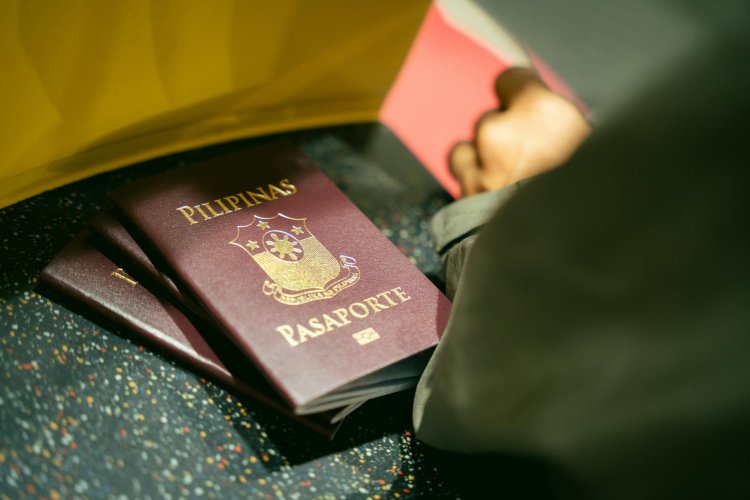
Citizenship-by-Investment (CBI) programs promise “speed,” but real processing times depend on the country—and on whether a CBI program even exists in the region you’re considering. In some jurisdictions, a passport can be obtained in weeks; in others, only naturalization and actual residency timelines matter.
Below is a practical breakdown of the fastest routes to new citizenship across six inhabited continents in 2026: which programs are available, how much they cost, how quickly documents are issued, and what limitations apply. If your priority is the “passport value” in a region rather than raw speed, see the best citizenship options in each region of the world in 2026.
The logic is simple: where CBI exists, investment typically beats years of residency. Where CBI doesn’t exist, countries with faster naturalization rules win the race.
Africa: São Tomé and Príncipe
Processing time: 6–8 weeks. Minimum contribution: a donation from $90,000. Visa-free destinations: 61.
Africa’s “fastest passport” is also one of the most accessible CBI options worldwide. Citizenship by Investment in São Tomé and Príncipe launched on August 1, 2025, and by January 2026, the country had already issued its first passports.
Applications can be handled remotely: the investment citizenship unit operates as a public–private partnership and is based in Dubai. The applicant makes a single donation: $90,000 to the National Transformation Fund plus $5,000 for the application fee. For a family of up to four people, the total contribution is $95,000; each additional dependent adds another $5,000.
In terms of visa-free mobility, the São Tomé and Príncipe passport is more modest than many Caribbean or European documents: visa-free access and visas on arrival cover 61 countries, including South Africa, Hong Kong, and Singapore. At the same time, travel to the EU and the UK typically requires visas.
The main “strategic” advantage isn’t the size of the visa-free map—it’s the country’s status within CPLP (Community of Portuguese Language Countries). São Tomé and Príncipe citizenship can help with immigration pathways to Portugal and Brazil.
If you need an alternative fast route in Africa, consider Sierra Leone: the Go-for-Gold program can deliver citizenship in 60–90 days. The standard expedited route is about $140,000 and roughly 90 days. The lineage-based route (for candidates of African descent) costs $100,000, includes a DNA test, and may lead to a decision in as little as 60 days.
Oceania: Vanuatu
Processing time: 30–60 days. Minimum contribution: from $130,000 (donation). Visa-free destinations: about 90.
Vanuatu remains among the world’s quickest CBI programs, although competition with São Tomé and Príncipe has intensified. Under the Development Support Program (DSP), citizenship is often granted within the 30–60 day range. According to agent surveys conducted by IMI, the average timeline—including document preparation and bank checks—is about 3.3 months.
For a single applicant, the DSP donation is $130,000; for a family of four, it’s $180,000. You also need to demonstrate personal or joint net assets of at least $250,000. Beyond the DSP, other CBI tracks operate under CIIP, including investment options that may allow a more flexible entry price for families.
One key point: in December 2024, the EU permanently suspended the Schengen visa-free regime for Vanuatu. For an “EU route,” applicants now more often choose a combination: Vanuatu citizenship plus a separate European residency program.
An alternative in Oceania is Nauru. In November 2024, the Economic and Climate Resilience Citizenship Program launched with timelines of 3–4 months. The base contribution is $115,000, but a limited-time offer runs until June 30, 2026, reducing the donation to $90,000 (similar to São Tomé). At the same time, Nauru lost visa-free access to the UK in December 2025 after a statement by the UK Home Office regarding risks related to CBI.
Asia: Turkey and Cambodia
In Asia, two active CBI programs are available, and both can grant citizenship in roughly 3–6 months.
Turkey
Timeline: 3–6 months. Minimum threshold: $400,000 (real estate). Visa-free destinations: about 120.
Turkey’s CBI program is one of the most widely used worldwide. Since 2018—when the threshold was lowered to $250,000 and later raised to $400,000 in 2022—citizenship has been granted to more than 13,000 investors and their family members.
The most common route is purchasing real estate worth at least $400,000 and holding it for a minimum of three years. Alternatives include a $500,000 bank deposit, buying government bonds, or contributing to an investment fund.
In February 2026, the Istanbul immigration directorate introduced day-of-application biometrics for CBI applicants. In well-prepared cases, the full cycle—“application to passport”—can now fit in under 3 months.
Turkey is transcontinental, so it’s sometimes grouped under Europe as well. In this article, it’s covered in the Asia section and referenced again below in the Europe section.
A separate advantage: Turkish citizenship may support eligibility for an E-2 visa in the United States under the treaty. The condition is that you must be a Turkish resident for at least three years (after citizenship is granted). Still, for investors, it remains an attractive “gateway” to the US.
Cambodia
Timeline: 3–6 months. Minimum contribution: $245,000 (donation). Visa-free destinations: about 53.
Cambodia is the only Asian country with a different active CBI model. The legal basis is the 1996 Citizenship Law. There are two routes: a $245,000 donation to the Royal Government or an investment of $305,000 into a project approved by Cambodia’s Development Council.
Including government fees spread across four payment stages, the “all-in” total typically reaches around $330,000. During the process, the applicant must visit Cambodia three times—for document preparation, submission, and passport collection.
The program allows dual citizenship and grants full property rights, including the ability to own land in the applicant’s name.
A Cambodian passport enables visa-free entry to all ASEAN countries, which matters to investors focused on Southeast Asia. Outside the region, mobility is more limited. Cambodia also is not part of CRS, which some value when financial privacy is important.
North America: Saint Kitts and Nevis and El Salvador
Formally, the fastest CBI path to citizenship in North America is El Salvador (around two months). However, due to high costs, limited transparency about the mechanics, and modest market demand, the market typically also considers Saint Kitts and Nevis. Let’s start with the Caribbean.
Saint Kitts and Nevis
Timeline: 4–6 months (via the IMI tool). Minimum contribution: $250,000 (donation). Visa-free destinations: about 157.
The Caribbean dominates the CBI market in North America, and Saint Kitts and Nevis is one of the “oldest” players: the program has been running since 1984 and became a benchmark for many later jurisdictions.
The Sustainable Island State Contribution (SISC) route is a non-refundable $250,000 donation for a single applicant or a family of up to four. The real-estate option starts from $325,000 for an approved development with a 7-year holding requirement, or from $600,000 for a private home for one family.
Processing takes 4–6 months, and you can apply remotely. The government announced a 2026 requirement for minimum physical presence of 30 days, but at the time of publication it had not yet come into force.
Geographically, most major Caribbean CBI countries are treated as North America: Saint Kitts and Nevis, Dominica, Grenada, Antigua and Barbuda, and Saint Lucia. Dominica is often the most affordable entry point (from $200,000). Grenada stands out with a unique link to a US E-2 visa. Overall, timelines across the Caribbean typically range from about 4 to 8 months.
El Salvador
El Salvador reviews CBI applications in about around two months, making it technically the fastest CBI option in the Western Hemisphere.
Cost is roughly $1 million, with payment possible in Bitcoin or USDT. The program launched in late 2023, and analysts note that the price appears high relative to the passport’s value. The document provides access to roughly 137 visa-free destinations, including Schengen and the UK, but program structure details, due diligence procedures, and application volumes remain insufficiently disclosed.
Europe: Turkey
Europe offers two scenarios for citizenship via investment, but they differ dramatically in cost, timelines, and outcomes. Within the “CBI in Europe” category, Turkey is effectively the main option.
Turkey (transcontinental)
The Turkish CBI described above grants citizenship in 3–6 months with a minimum threshold of $400,000. For those who view Turkey as a European jurisdiction (NATO member, EU accession candidate, and partially located in Europe), it’s one of the fastest ways to obtain citizenship “on European soil.”
At the same time, Turkish citizenship is not the same as EU citizenship: you do not gain the right to live and work freely across all 27 EU countries.
There are currently no other active CBI programs in Europe under the standard “citizenship by investment” approach. In some countries, alternatives appear—such as Malta developing citizenship-by-merit (CBM) models—but timelines and rules there can be less consistent.
Some European countries allow accelerated naturalization through residency (for example, Poland, Ireland, and (for now) Portugal—around five years), but they don’t compete with Turkey on speed.
South America: Argentina
Timeline: two years of residency. Minimum investment requirements depend on the cost of residency. Visa-free destinations: about 172.
In South America, there is no active CBI program. Argentina fills this gap with the fastest naturalization route in the region—and one of the quickest options in the world outside CBI jurisdictions.
Foreigners who obtain legal residency in Argentina can apply for citizenship after two years. Important: eligibility is not the same as approval. Once you qualify, the citizenship application process itself can still take several more months.
For a Rentista visa, you must prove income of roughly from $2,000 per month from foreign sources. Historically, the “residency to decision” path in Argentina has been faster and more predictable than in neighboring countries. After Peru extended naturalization from two to five years, only Argentina and the Dominican Republic continue to offer two-year citizenship for most applicants.
However, the calculations have changed: Decree 366/2025 introduced a requirement for physical presence in Argentina throughout the entire two-year period. Any departure from the country resets the counter. Before the decree, presence requirements were more lenient.
Argentina allows unrestricted dual citizenship. The passport provides visa-free access to 172 destinations, including Schengen, and also includes residency rights under the MERCOSUR Residence Agreement in nine South American countries.
Big news is coming: Argentina has put the legal framework in place for the first CBI program in Latin America via Decree 524/2025 in July 2025. A dedicated agency for citizenship-by-investment programs was created, and the definition of the investment threshold was delegated to the Ministry of Economy. The final figure has not been published yet, but period communications mentioned a level around $500,000 for “productive projects.”
The program is still being prepared: the government is running a tender for firms that will design and manage the mechanism. Market observers estimate that applications could begin in late 2026 or early 2027.
If it launches, Argentina will become the only country within MERCOSUR that offers both two-year naturalization through residency and direct citizenship through investment.
Continent-by-continent comparison
Your choice depends on your goal: do you need a “second citizenship” as fast as possible, or is the strategic value of the passport more important?
If you need maximum speed, São Tomé and Príncipe leads: you can get a passport in about six weeks with a $90,000 contribution.
If you want a passport that acts like a “key” to MERCOSUR residencies and delivers access to about 172 visa-free destinations, Argentina will require patience—but in strategic value it ranks among the strongest options in the Western Hemisphere.
And if CBI isn’t for you, other paths remain: citizenship within two years can also be achieved without investment programs—as long as residency conditions are met.
If you’re looking for the fastest path to a new status, citizenship by investment (CBI) programs can sometimes deliver results sooner than standard naturalization—provided you pick the right jurisdiction and meet all documentation requirements. At Digital Nomad (digital-nomad.gr), we help you compare timelines, costs, and practical limitations for specific routes so you can decide with fewer risks. Check golden visa & CBI details
Our Telegram channel about various types of Greek residence permits, digital nomad programs, and the Greek Golden Visa: @digitalnomadgr
 570
570